



When managing rotational grazing for goats and sheep, keeping your herd hydrated is as crucial as maintaining good pasture. A portable water tank system offers unmatched flexibility, especially when you’re off-grid grazing your livestock in the woods or areas where you don’t have easy access to water.
The design I use keeps things straightforward: durable materials, easy connections, and a float valve system so the tank doesn’t overflow. It’s built to stand up to daily use and the occasional bump from curious goats.
A practical water system for rotational grazing
One of the simplest and most effective ways to give water access to goats and sheep on pasture is with a portable, gravity-fed tank system. This setup is easy to move with your herd, doesn’t require permanent pipeline infrastructure, and can be tailored to fit the size of your operation.
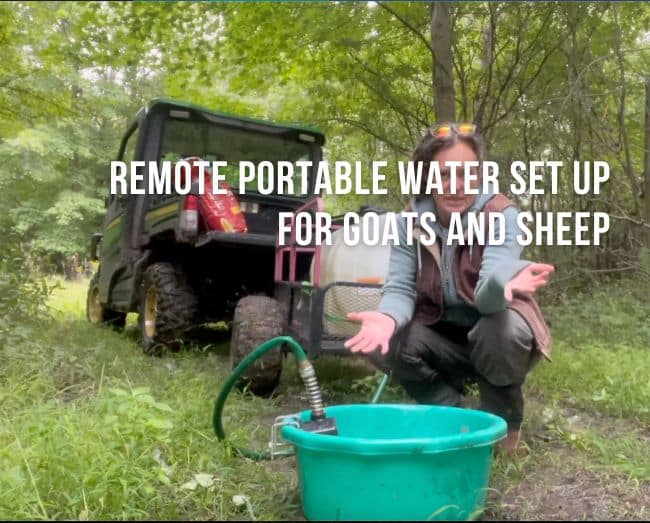
The system works like this: a water tank is mounted on a trailer and secured with ratchet straps. A shut-off valve at the bottom connects to a garden hose, which runs to an automatic float valve in your livestock tank. As the animals drink, the float valve refills the tank automatically, keeping fresh water available without constant oversight.
Benefits of the portable gravity-fed system
This type of setup has become one of my go-to tools for rotational grazing. Here’s why:
- Adaptable: Works in pastures, the woods and other remove sites without permanent water lines or hauling garden hose
- Efficient: The float valve keeps tanks full without manual refills.
- Low maintenance: Requires minimal upkeep once set up.
- Mobile: Easy to haul by ATV, UTV, or tractor when it’s time to move to a new location.
Supplies needed: DYI mobile water tank system
You don’t need anything complicated to put together a portable water system. Here’s a basic supply list to get started:
- Water tank sized for your herd, equipped with a shut-off valve
- Garden hose to connect the tank to the float valve
- Float valve to maintain water levels
- Hose fittings and adapters (depending on the supplies you already have or purchase)
- Quick-connect couplers
- Durable trailer to move and support the tank
- Ratchet straps to secure the water tank to the trailer so it doesn’t move around
- Tow strap or vehicle for moving between paddocks
These are all easy to find at farm supply stores or online on Amazon, and you can customize based on the size of your operation.

Note: The link(s) above is an affiliate link.
Tips for cleaning and maintenance
Keeping the system clean ensures your herd always has access to safe, fresh water. A few simple practices help it run smoothly:
- Use a scrub brush to clean tanks and float valves on a regular schedule.
- In hot weather, add a small piece of a chlorine tablet to control algae growth.
- Choose smaller tanks if you’re moving frequently, water stays fresher, hauling is easier, and you conserve water.
Video example: Portable water tank trailer
To give you a closer look at how this works in practice, I put together a YouTube video showing one of our portable water tank trailers in action. In the video, I walk through the setup, explain how the float valve connects, and show how easy it is to move the tank between paddocks during grazing rotations.
Related Resources
If you’re working on building out your grazing system, these resources might help:


LEAVE A COMMENT
Comments