




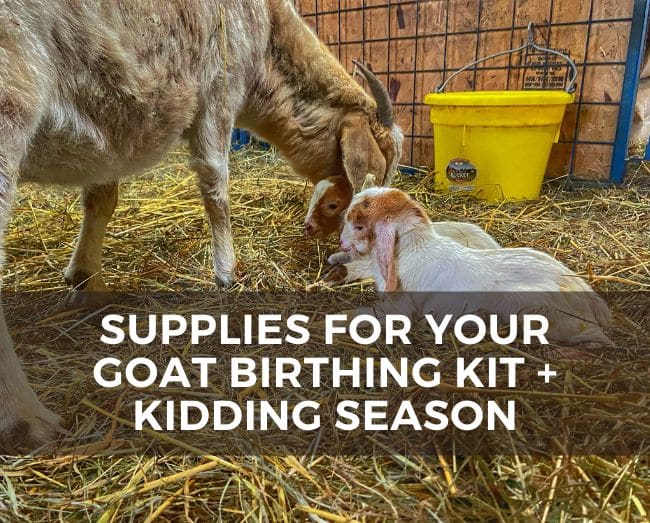
When kidding season approaches, having your goat birthing kit organized and ready makes the process smoother for both you and your herd. Whether you’re assisting with a birth, caring for newborn kids, or supporting the doe after delivery, preparation matters.
For more details on what to do once kids arrive, read my full blog post: Newborn Goat Care After Birthing.
Below I’ve pulled together the supplies we use on our farm during kidding season, with notes on how they fit into the process. Most of them are easy to access through Amazon or your local farm store. For ease you can most of these items in my Amazon Kidding Supply List.
All links are affiliate links, which come at no cost to you. I only share products we use on our farm. I do earn a small commission by sharing.
Supplies for newborn goat care
These are the core kidding supplies I keep together in our goat kidding kit so everything is within reach when a doe freshens.
Stainless steel scissors
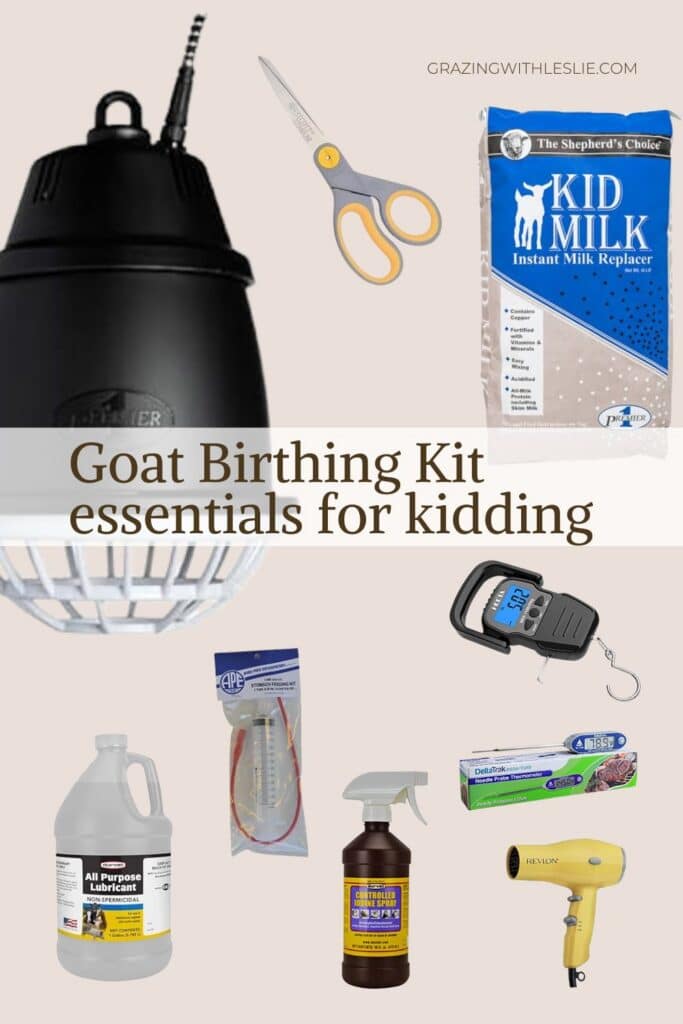
Keep a pair specifically for cutting umbilical cords. These should be cleaned and disinfected before use. I like the Westcott Titanium scissors.
Iodine
Iodine is used for dipping the cut umbilical cord to prevent infection. I also use it as a disinfectant for scissors.
Small plastic shot glasses
These small shot glasses work well for dipping navels in iodine quickly and thoroughly. Disposable versions make cleanup simple.
Towels
Old bath towels or bar mop towels work well for drying newborn kids. Keeping a stash just for kidding season is helpful.
Hairdryer
A hairdryer dedicated for kidding season is especially useful during cold weather. It helps dry kids more quickly and reduces the risk of hypothermia.
Digital thermometer
If a newborn seems cold or sluggish, checking body temperature helps you know how to proceed. I like our DeltaTrak digital thermometer.
Feeding tube
While not necessary to have on hand, a lamb or kid feeding tube is a good item to eventually add to your goat birthing kit. It can come in handy if you have a week baby goat who needs to be fed.
Banding or castration tool
If you’re planning to band or castrate your male goats to become weathers, this tool, paired with the bands, is a good one to have on hand. Depending on the side of your goat kids, some can be banded within the first week, while some may be the first month.
Milk and colostrum replacer
While not essential to have on hand, these two items – milk replacer and colostrum replacer – can be a lifesaver if you have new baby goats with a mom (doe) who hasn’t come into milk or isn’t able to allow her kids to nurse. Having a bottle to feed helps as well, my preference is this one from Premier.
Hand milker
Sometimes unfortunate situations will happen when goats are birthing their babies: a doe will not let her baby nurse or a kid doesn’t make it. In either of these instances a hand milker can come in handy to be able to give the newborn baby goat it’s mom’s milk and colostrum. Or, in the event of the loss of a baby, the colostrum and milk can be saved and froze for a future use. This isn’t necessary to have on hand, since you can milk your goat by hand. But, it is a handy tool to eventually add to your kidding kit.
Kid Heater / Heat Lamp
If you’re kidding in colder weather, having a heat source for your baby goats for the first few days to week isn’t a bad idea. I really like these Sweeter Heaters since they’re a safer version for a heat lamp, which reduces the odds of barn fires.
Weighing and identification supplies
Hanging digital scale
The kid scale allows you to weigh each newborn baby goat shortly after birth and record the weight. This helps track growth and identify any early concerns.
Scale sling (or bucket)
A baby goat sling makes weighing easier and more secure. A bucket can also work depending on the size of the kid.
Ear tags
Apply permanent identification once the kid is stable. We make sure they’re official USDA scrapie tags. I will order ours through Premier 1 Supplies with our farm logo, farm number and specific colors for male/females.
Paper ID bands
Temporary identification bands are helpful at birth. I write the dam’s number, date of birth, gender, and weight directly on the band. These can be the wrist bands you get for events.
Record keeping supplies
Notebook or notepad
I typically jot down notes in the barn and transfer them later if needed.
Goat record-keeping app or online system
Record gender, weight, ear tag number, and anything notable about the birth. Consistent records make later management much easier.
Kidding pen set up
Kidding pen or jug
After birth, I move the doe and kids into a smaller pen for 24 to 48 hours to allow bonding. Some pairs may need additional time depending on how things went. Learn more about kidding pens in this article.
Supplies for does after kidding
Freshwater (often with electrolytes)
Hydration is important immediately after kidding. Electrolytes can be helpful depending on the situation. I like the BlueLite Sheep and Goat Electrolytes.
High quality hay, such as alfalfa
Providing a slice of quality hay supports recovery and milk production.
Antibiotics (if assistance was required)
If I had to reposition a kid or assist significantly with the birth, I administer antibiotics to reduce infection risk. Always consult your veterinarian for a prescription and regarding proper use.
My preference is using LA 200, the Bio-Mycin brand since it burns less when administered. But, other brands will work based on availability with the timing of your needs and what your veterinarian has on hand.
Halter
Have a halter on hand to safely tie up your doe if you need to assist with birthing, attend to her after the birth, or help the new baby goat nurse.
Supplies for assisting goats with birthing and delivery
OB gloves
These vet ob gloves are helpful when assisting with births or checking to see if a kid needs repositioning, and they’re always part of our goat birthing kit. These are the long gloves that go up to your shoulder. Keeping a box in your kidding kit makes them easy to grab when needed.
Disposable gloves
These gloves are good to have on hand when working with vet supplies, medicines, or bodily fluids. Goats can also carry zoonotic diseases, meaning diseases that can be transferred between animals and humans. It’s a good preventive practice to always use gloves
Kidding all purpose lubricant
This veterinarian all purpose lubricant is useful if you need to assist with any goat births or do any checking with your does.
Betadine Solution
Betadine solution is good to have on hand if you have to assist with any birth, either pulling a kid or even doing an exam to determine the position of any kids. This is a disinfectant that I will wipe on the rear end of the the doe, as well as my gloves before doing any work. This will help with any future infections.


LEAVE A COMMENT
Comments