



Note these products were reviewed in early 2026, please note technology and features may have changed.
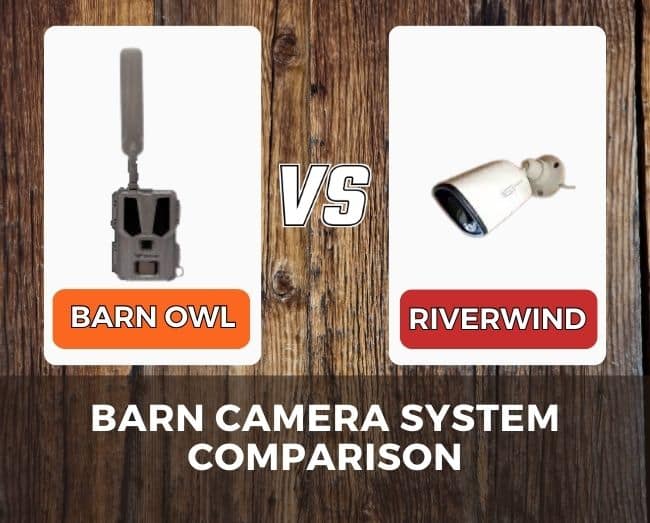
If you’re comparing Riverwind barn cameras and Barn Owl cameras for kidding or calving season, understanding how each system works in real farm conditions matters more than marketing claims.
On our farm, I rely on barn cameras heavily during kidding season. They allow me to monitor what is happening when I’m running errands, at a meeting, or asleep in the middle of the night. I set specific times to check the cameras so I can minimize unnecessary trips to the barn while still keeping a close eye on does that are getting close. It saves time, reduces disruption in the barn, and gives me peace of mind.
While I don’t currently use Riverwind barn cameras or Barn Owl cameras, our current system is working. But, if we were starting over or upgrading in the future, both of these would be on the list to consider.
What I appreciate about both companies is the systems are built specifically for farmers and ranchers. They are designed around rural realities like metal barns, long distances between house and barn, limited WiFi, and off grid locations.
If you are just beginning to research barn cameras, I recommend reading my broader article on barn camera system types first. This article focuses specifically on comparing Riverwind barn cameras and Barn Owl cameras for monitoring livestock during kidding and calving season.
Table of contents
- Riverwind barn cameras
- Barn Owl cameras
- Comparison: Riverwind and Barn Owl cameras
Riverwind barn cameras
Riverwind barn cameras are offered in multiple system types that function differently. Understanding how each one works is important before comparing them directly to cellular based options, which is how Barn Owl works.
Riverwind high definition wireless system
This system uses long range antennas to transmit video from your barn to your home internet connection. You do not need WiFi in the barn. The control unit is located in the barn and connects to an antenna, which communicates with another in your house.
Cameras can be viewed on a phone, tablet, or computer. There is no monthly subscription fee.
The cameras are 1080p high definition and offer approximately a 103 degree field of view. Multiple cameras can be installed and expanded over time.
Infrastructure considerations
This system requires line of sight between the barn and the house. Trees can be manageable, but brick/rock and metal can interfere with antenna transmission. Since many livestock barns are steel sided, antenna placement becomes important.
Remote viewing depends on your home internet upload speed. For smooth remote viewing, upload speed matters more than download speed.
Installation
This requires running Ethernet cables, mounting antennas, and aligning them properly. It is reasonable for someone comfortable with basic wiring and installation, but it is more involved than a cellular camera.
Riverwind hybrid wireless system
The hybrid system operates similarly to the high definition (HD) system but keeps the control unit in the house rather than in the barn. In addition to phones and computers, it can be viewed on a dedicated TV or monitor.
Like the HD system, it uses long range antennas and does not require WiFi in the barn. There is no subscription fee.
Infrastructure considerations
Line of sight is still required. Wiring and antenna alignment are similar to the HD system. The difference is primarily in how and where the video is displayed.
For farmers who prefer watching a larger screen during peak calving or kidding times, this may be appealing.
Installation
Similar complexity to the HD system, with additional setup for TV integration.
Riverwind stand alone wireless system
This system requires no internet at all. It transmits video wirelessly from the barn to a receiver connected directly to a TV or monitor in the house.
It provides live viewing only on that screen. Phone viewing can be added later if internet becomes available.
There is no subscription fee.
Infrastructure considerations
Line of sight between barn and house is still required. Power must be available in both locations. Ethernet cables are sourced locally by the customer.
Installation
Less network configuration is required compared to the HD and Hybrid systems, but antenna placement and alignment are still important.
Barn Owl cameras
BarnOwl cameras operate very differently from Riverwind barn cameras. They are cellular based and solar powered.
RangeCam 2
Since the RangeCam 2 connects through cellular service, it does not require WiFi or line of sight to your house. As long as there is cell signal, the camera can transmit photos and short video clips.
It can be triggered by motion, on a schedule, or on demand from your phone. It has approximately a 60 degree field of view. It is solar compatible and designed for off grid monitoring.
A monthly subscription plan is required.
Infrastructure considerations
Performance depends entirely on cell signal strength in your barn or pasture. Metal barns can reduce signal strength, and placement matters.
There is no wiring between buildings. This makes it attractive for remote pastures or leased ground.
Installation
Mount it, power it, activate it. Installation is simple compared to antenna based systems.
RangeCam Live
RangeCam Live adds livestream capability over cellular. It functions similarly to RangeCam 2 but allows live viewing rather than only motion triggered clips.
It still requires a subscription and still depends on cellular signal.
Infrastructure considerations
Like the RangeCam 2, successful use of the RangeCam Live depends on the strength of cell service in your barn or pasture. Metal barns can reduce signal strength. There is no wiring.between buildings
Installation
Mount it, power it, activate it. Installation is very simple.
Comparison: Riverwind and Barn Owl cameras
Signal reliability in metal barns
Riverwind barn cameras rely on antenna transmission between barn and house. Metal siding and rooflines can interfere if antennas are not properly positioned. Once installed correctly with clear line of sight, many farmers find the system works very well. r
Barn owl cameras rely on cellular signal. In some rural areas, cell signal may be strong enough to work well. In others, especially inside metal buildings, signal strength can drop significantly.
The deciding factor often comes down to which is stronger at your location: your home internet upload speed and line of sight, or your cellular coverage inside the barn.
Field of view and coverage
Riverwind barn cameras offer approximately 103 degrees of coverage. Barn Owl cameras offer approximately 60 degrees.
In a large calving or kidding barn with multiple pens, this difference can impact how many cameras are needed. A wider field of view may reduce the total number of cameras required to cover the same space.
Scalability in larger barns
Riverwind barn cameras can support up to 16 cameras within a system. Farmers often expand over time as their needs grow.
Barn Owl cameras operate individually, each with its own cellular connection and subscription. Managing multiple units may be straightforward from an app perspective, but subscription cost increases with each camera.
Weather performance
Riverwind barn cameras are permanently powered and mounted. They are typically installed as long term barn infrastructure.
Barn Owl cameras rely on solar charging and battery backup. Solar panel placement becomes important during extended cloudy periods, especially in northern climates.
Several farmers report strong cold weather performance, but battery dependent systems generally require closer monitoring in extreme conditions.
Installation complexity versus long term cost
Riverwind barn cameras require more planning, wiring, and installation work. The upfront investment is higher, but there is no monthly subscription.
Barn Owl cameras have lower upfront cost and very simple installation, but require ongoing monthly fees.
Making a decision: Finding the right fit
If I were starting over on our farm, I would prioritize a barn camera system with:
- A wide field of view
- No subscription fee
- Remote viewing capability
- Reliable notifications
- A setup that works inside a metal barn with minimal visual obstruction
I would be willing to spend more time on installation, or hire help if needed, if it reduced long term operating cost.
Factors to consider
- Barn close to house with clear line of sight and strong home internet: Riverwind barn cameras may make more sense.
- Barn close to house with no internet available: Riverwind stand alone system.
- Remote pasture with no line of sight to house: Barn Owl cameras.
- Large multi pen kidding or calving barn where continuous viewing is preferred: Riverwind barn cameras.
- Temporary or seasonal pasture setup: Barn Owl cameras.
- Flexibility with use and location beyond kidding or calving season: Barn Owl
Feedback and reviews on barn camera systems
To save you time, I pulled together feedback from farmer forums, Facebook livestock groups, and customer reviews on both the Riverwind and Barn Owl camera systems so you don’t have to sort through it yourself.
The points below reflect real world experiences shared by farmers using these systems for livestock monitoring, including both strengths and recurring concerns.
Barn Owl cameras
Across website reviews, forums, and social media discussions, barn owl cameras are most often described as easy to install and practical for remote livestock monitoring, especially for checking water tanks and pasture situations without WiFi. Many farmers praise customer service and convenience. The most common concerns involve motion sensitivity, data usage costs, and app usability rather than image quality.
Farmer feedback
Here’s a snapshot of feedback from farmers on Barn Owl cameras:
- Easy setup and activation
- Useful for monitoring cattle water tanks and remote pastures
- Solar bundles reduce battery changes
- On demand photo capability
- Saves time and fuel
- Strong customer service feedback
- Good image and video quality
- May not catch everything
- Motion sensitivity requires adjustment
- Data usage can increase quickly
- App or portal has learning curve
- Occasional missed captures until settings are optimized
Riverwind barn cameras
In online forums and livestock groups, Riverwind barn cameras are frequently described as dependable, purpose built barn monitoring systems. Farmers often compare them to the basic consumer security WiFi cameras and say the Riverview cameras are more reliable in real barn conditions. The tradeoff most commonly mentioned is higher upfront cost and a more involved installation process, but many farmers report long term satisfaction once installed.
Farmer feedback
Here’s a snapshot of feedback from farmers on Riverview barn cameras:
- Works better than generic WiFi systems
- Good option for indoor barns and calving lots
- Many farmers expand system over time
- Playback capability valued
- Seen as long term investment
- Positive customer support mentions
- Requires planning for line of sight installation
- Reliable once installed
- Often recommended in livestock community discussions
Key takeaways
- Riverwind barn cameras and Barn Owl cameras are both designed for rural livestock monitoring.
- Riverwind systems rely on antennas and line of sight, but do not require a subscription.
- Barn Owl cameras rely on cellular service and require a monthly plan.
- Riverwind offers wider field of view and continuous live viewing.
- Barn Owl cameras offer easier installation and more flexibility in remote locations.
- The right choice depends on barn layout, distance from house, internet upload speed, and cellular signal strength.
References
- AgTalk. (n.d.). Barn camera discussion threads. Talk.NewAgTalk.com. Retrieved February 27, 2026, from https://talk.newagtalk.com
- Barn Owl Tech. (n.d.). RangeCam 2 and RangeCam Live product information. https://barnowl.tech
- Barn Owl Tech. (n.d.). Customer reviews. https://barnowl.tech
- Facebook. (n.d.). Barn Owl Tech reviews and comments. https://www.facebook.com
- Facebook. (n.d.). Riverwind Barn Cameras (BarnWatcher) reviews and comments. https://www.facebook.com
- Riverwind Supply. (n.d.). High definition wireless barn camera systems. BarnWatcher. https://www.barnwatcher.com
- Riverwind Supply. (n.d.). Hybrid wireless barn camera systems. BarnWatcher. https://www.barnwatcher.com
- Riverwind Supply. (n.d.). Stand-alone wireless barn camera systems. BarnWatcher. https://www.barnwatcher.com


LEAVE A COMMENT
Comments