



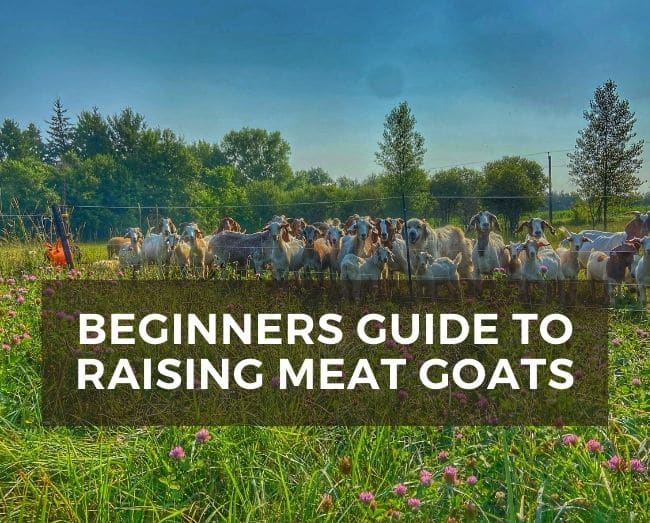
Interest in raising meat goats for beginners has grown among small farms, homesteads, and diversified livestock operations across the United States. Goats can fit well into pasture-based systems, utilize browse and mixed forage, and be raised at a variety of scales depending on a farm’s goals.
If you are considering raising goats for meat for the first time, it helps to understand the basics before bringing animals home. Choosing the right breed, preparing fencing and shelter, planning pasture management, and understanding the production cycle all play a role in building a successful herd.
This guide walks through the fundamentals of meat goat farming for beginners, including breed selection, herd size, infrastructure, feeding, grazing systems, herd health, and marketing options. Throughout the article you will also find links to more detailed resources where each topic is explored in greater depth.
Whether you are completely new to livestock or already raising other species and looking to add goats, understanding these basics can help you start with a strong foundation for managing a meat goat herd.
Table of contents
- Is raising meat goats right for your farm?
- Basic goat terminology for beginner goat farmers
- Why farmers raise meat goats
- Choosing the right meat goat breed
- How many meat goats should beginners start with?
- How much land do you need to raise meat goats?
- Buying your first meat goats
- Infrastructure needed before bringing goats home
- Pasture-based meat goat systems
- Rotational grazing for meat goats
- Feeding meat goats
- Health management basics
- Predator protection
- A typical year raising meat goats
- Marketing and selling meat goats
- Checklist for starting a meat goat herd
- FAQ: raising meat goats for beginners
Is raising meat goats right for your farm?
Meat goats can be a good fit for many farms, but they are not the right livestock choice for every situation. Before starting a meat goat herd, it helps to think through a few practical factors related to your land, management goals, and available time.
One advantage of raising goats for meat is their flexibility. Goats can often be raised on smaller acreages compared with larger livestock such as cattle. Their browsing behavior also allows them to utilize vegetation that other livestock species may ignore, including weeds, brush, and woody plants.
Goats can also fit well into diversified grazing systems. Some farms raise goats alongside cattle or sheep to improve pasture utilization because each species tends to consume different plants.
However, goats do come with specific management challenges. Secure fencing is essential, and parasite management requires consistent attention, particularly in regions where parasites can build up quickly in pasture systems.
Like any livestock enterprise, raising meat goats also requires a marketing plan. Understanding how goats are commonly sold in your region can help determine whether meat goat production will fit your farm goals.
For many small farms and homesteads, meat goats can be a productive addition to a grazing system when pasture management, infrastructure, and herd health practices are in place.
Basic goat terminology for beginner goat farmers
If you are new to goats, one of the first things you will notice is that goat producers use a specific set of terms to describe different animals and stages of production. Understanding terminology makes it easier to follow conversations with other farmers and understand breeding and management discussions.
Common goat terms include:
- Doe – female goat
- Buck – intact male goat used for breeding
- Wether – castrated male goat
- Kid – baby goat
- Doeling – young female goat
- Buckling – young male goat
- Herd – group of goats
Why farmers raise meat goats
Meat goats have become increasingly popular among small farms and diversified livestock operations.
One driver is growing consumer demand for goat meat in the United States. Goat meat is widely consumed globally, and demand continues to increase in many communities across the country.
Goats also fit well into many farming systems because of how they utilize forage. Unlike cattle and sheep that primarily graze grass, goats often browse shrubs, weeds, and woody plants. This allows them to utilize vegetation that other livestock species may ignore.
Another advantage is the flexibility of herd size. Compared with cattle, goats can be started on a smaller scale. Many farmers begin with a small number of animals and expand their herd gradually as they gain experience in meat goat production.
Goats can also complement other grazing livestock. Because goats prefer different plants than cattle or sheep, mixed-species grazing systems can help improve pasture utilization.
Choosing the right meat goat breed
One of the first decisions beginners face when raising meat goats is selecting a breed. Several breeds are commonly used in meat goat farming in the United States.
Common meat goat breeds include:
- Boer
- Kiko
- Spanish
- Savanna
- Myotonic
Each breed has different characteristics related to growth rate, parasite resistance, maternal ability, and adaptability.
For example, Boer goats are widely known for their muscling and growth performance, while Kiko and Spanish goats are often recognized for their hardiness in pasture-based systems.
Many commercial meat goat herds use crossbreeding programs to combine desirable traits from multiple breeds. For example, on our farm, Cylon Rolling Acres, we’re using a cross breed of Boer and Kiko to take advantage of the muscling and strong meat characteristics, as well as performance on a forage based system.
If you want a deeper comparison of these breeds, see my article on the top meat goat breeds.
How many meat goats should beginners start with?
One of the most common questions new goat owners ask is how many animals they should start with. The answer depends on your goals, available land, and management experience.
Because goats are herd animals, at minimum, goats should be kept with at least one or two companions. This can be goats, or it could be alongside other livestock.
Typical starting herd sizes include:
- 3 to 5 goats for learning or homestead situations
- 10 to 20 breeding does for a small production herd
- Larger herds for established livestock farms
Starting with a manageable herd size allows beginners to learn basic management practices before expanding.
How much land do you need to raise meat goats?
The amount of land needed to raise goats can vary significantly depending on pasture quality, rainfall, soil fertility, and grazing management practices.
Stocking rates depend heavily on forage production and grazing management.
Pasture diversity also plays an important role. Goats tend to thrive in pastures that include a mix of grasses and legumes (with more emphasis on legumes). Weeds aren’t a bad thing either. They also do well with browse plants (such as brush, shrubs, trees and other woody species).
Stocking rates vary widely depending on pasture productivity. I walk through the factors to consider in my article on how many goats per acre your pasture can support.
Buying your first meat goats
Once you have a plan for herd size and infrastructure, the next step is purchasing goats.
Common places to find goats include:
- reputable breeders
- private farm sales
- production sales
- livestock auctions
When evaluating goats, look for animals that appear healthy and structurally sound.
Key things to observe include:
- body condition
- sound legs and feet
- alert behavior
- healthy coat
I cover common mistakes buyers make and how to evaluate animals in my article on finding goats for sale.
Infrastructure needed before bringing goats home
Preparing infrastructure before purchasing goats can prevent many beginner challenges. This includes:
- Fencing: Secure fencing is essential when raising goats. Common fencing systems and design considerations are covered in my article on goat fencing requirements and options.
- Shelter: While a barn isn’t always necessary, goats need basic shelter to provide protection from wind and rain. You can learn more about practical housing ideas in this article on goat shelter basics and shelter ideas.
- Water systems: Goats require constant access to clean water. I outline several practical options in my article on goat water systems.
Pasture-based meat goat systems
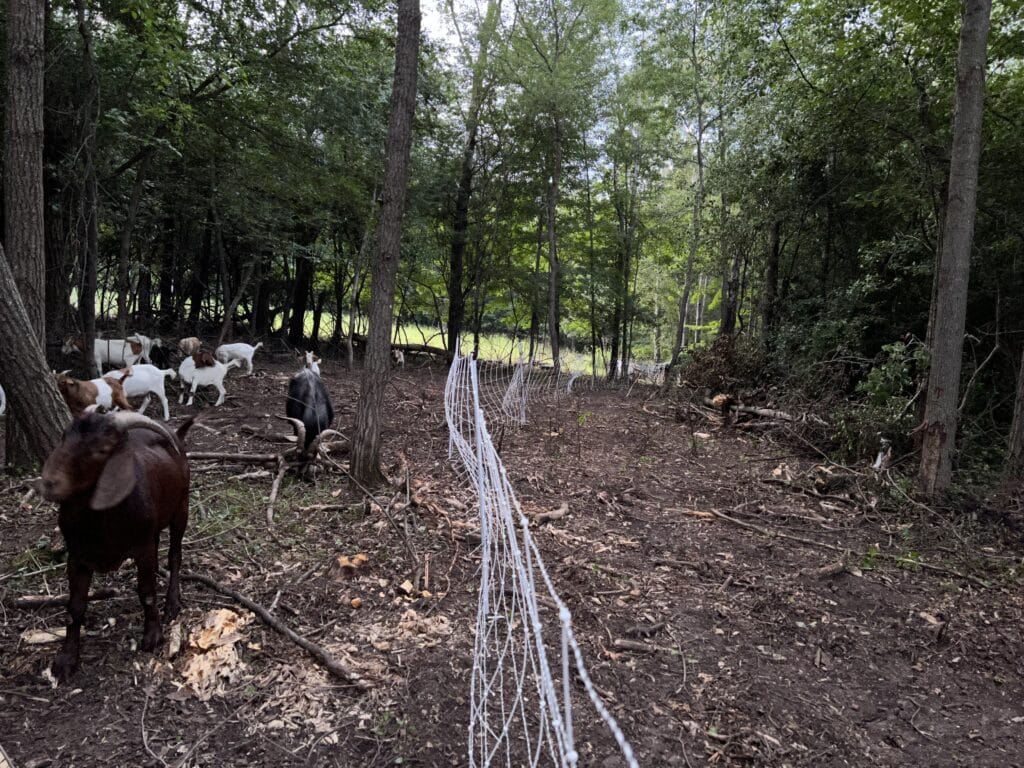
Many goat farms raise goats successfully in pasture-based systems, including on our farm in Western Wisconsin.
Goats are natural browsers rather than strict grazers. They often prefer shrubs, weeds, and woody plants. However, they can do quite well in a pasture-based environment.
If you are planning pasture for goats, I cover forage types and pasture considerations in my article on goat pasture management.
Rotational grazing for meat goats
If you’re considering utilizing pasture with your goats, it is important to use a rotational grazing strategy vs. a continuous grazing system.
The difference between these is that you’re rotating your herd through smaller paddocks where your goats will graze for short periods of time before moving on. While continuous grazing is just simply giving you herd access to the same pasture all the time, or putting them in a pasture for extended periods.
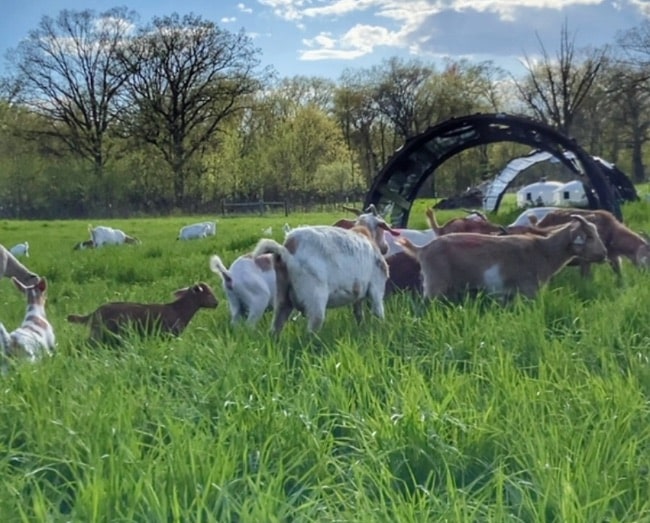
As an example on our farm we’re using an intensive rotational grazing system where our herd is moving every 1-3 days. There are simple tools to help make this easy to do (portable fence or even virtual fence).
A rotational system can improve pasture productivity, soil health, and manure distribution. It is also important for animal health, helping reduce parasite issues.
I explain how rotational grazing works and how it can be implemented on goat farms in my guide to rotational grazing for goats.
Feeding meat goats
Hay and grain
Hay is often used during winter or when pasture is limited. Using a feeder can reduce waste. You can learn more about different feeder options in this article.
Grain can also be fed as a supplement to feeding hay, but it is not always necessary, especially if the hay being fed is high quality or pasture in season is optimal. Grain may be a good option for animals who have higher nutrition needs, such as does who are pregnant, growing kids, or does getting ready to be bred.
Minerals and supplements
Goats should be provided with loose minerals (bagged instead of a block) formulated for goats. You can learn more about mineral nutrition and feeder options in this article.
Health management basics
With raising livestock it’s important to understand basic health needs for animals and know what to watch for. This is a two part approach, which depends on your own learning and working with a veterinarian.
Learning basic veterinary care
In addition to working with a veterinarian (see the next section), there’s a lot you can learn simply from self study, observing your livestock, and talking with peers.
Here are some resources I’ve personally vetted and have found useful for basic goat health care and veterinary work. Additionally, some of these resources are helpful for understanding health concerns as you work with a veterinarian, even if it is beyond your ability to treat or care for. When I’m looking at resources, much like I do here with the articles I write, I am using university research, scholarly peer-reviewed journals, and other publications and books supported by scientific data. Real life experiences are important, but so is the science.
- Holistic Goat Care (book)
- Storey’s Guide to Raising Meat Goats (book)
- Natural Goat Care (book)
- Merck Veterinary Manual
Note: The link(s) above is an affiliate link.
Working with a veterinarian
Establishing a relationship with a veterinarian familiar with small ruminants can be helpful when raising goats. Sometimes it can be hard to find a vet who has experience with goats in particular. You probably have read about this in online forums.
However, it’s important to start to build a relationship with a large animal veterinarian who works with livestock. They still have the foundational knowledge to treat and work with farm animals, especially when more serious issues may arise with your stock. Additionally, by having an established relationship with a veterinarian, they are more likely to work with you over the phone or prescribe medications based on their knowledge of your herd and working with you in the past. This is part of the federal Veterinary Feed Directive.
Veterinarians can assist with:
- vaccination programs
- parasite management strategies
- diagnosing illnesses
- assisting during difficult births
- late night farm calls
- prescribing prescription medications
Over time you’ll start to learn how to assess health concerns to treat and care for your goats with less reliance on your veterinarian. Even though we’ve been raising goats for nearly 15 years, I still will consult with my herd veterinarian at least 1-2 times a year. Part of this relationship also involves annual farm calls with our livestock guardian dogs, but we also review how the goat herd is doing as well.
Vaccinations
There aren’t many vaccinations that are standard protocol for goat meats. However, it is fairly common practice to administer the CDT vaccination. It is an annual vaccination. The first time an animal receives it they require a booster, which is a follow up dose about two weeks after the first dose. CDT stands for and protects against: Clostridium prefringens C&D (for overeating disease) and tetanus. Always look at the label for exact instructions and consult your veterinarian with questions.
Common health issue: Parasites
Internal parasites are one of the most common challenges in goat production. Pasture management and rotational grazing can influence parasite pressure (learn more in this article).
External parasites are often less of an issue, but can be a problem with goats that are kept inside for extended periods of time.
Predator protection
Predators, such as bear, coyotes, wolves, stray dogs, hawks and even eagles, can pose risks depending on the region.
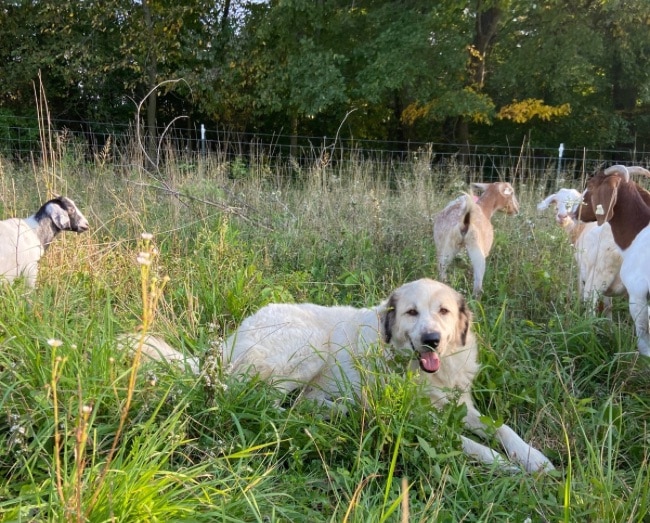
Many farms, including our farm, rely on livestock guardian dogs to protect the goat herd, which is even more important during kidding season. Some farms will use other guardian animals, such as llamas or donkeys.
I cover how guardian dogs work in my article on livestock guardian dogs for goats.
A typical year raising meat goats
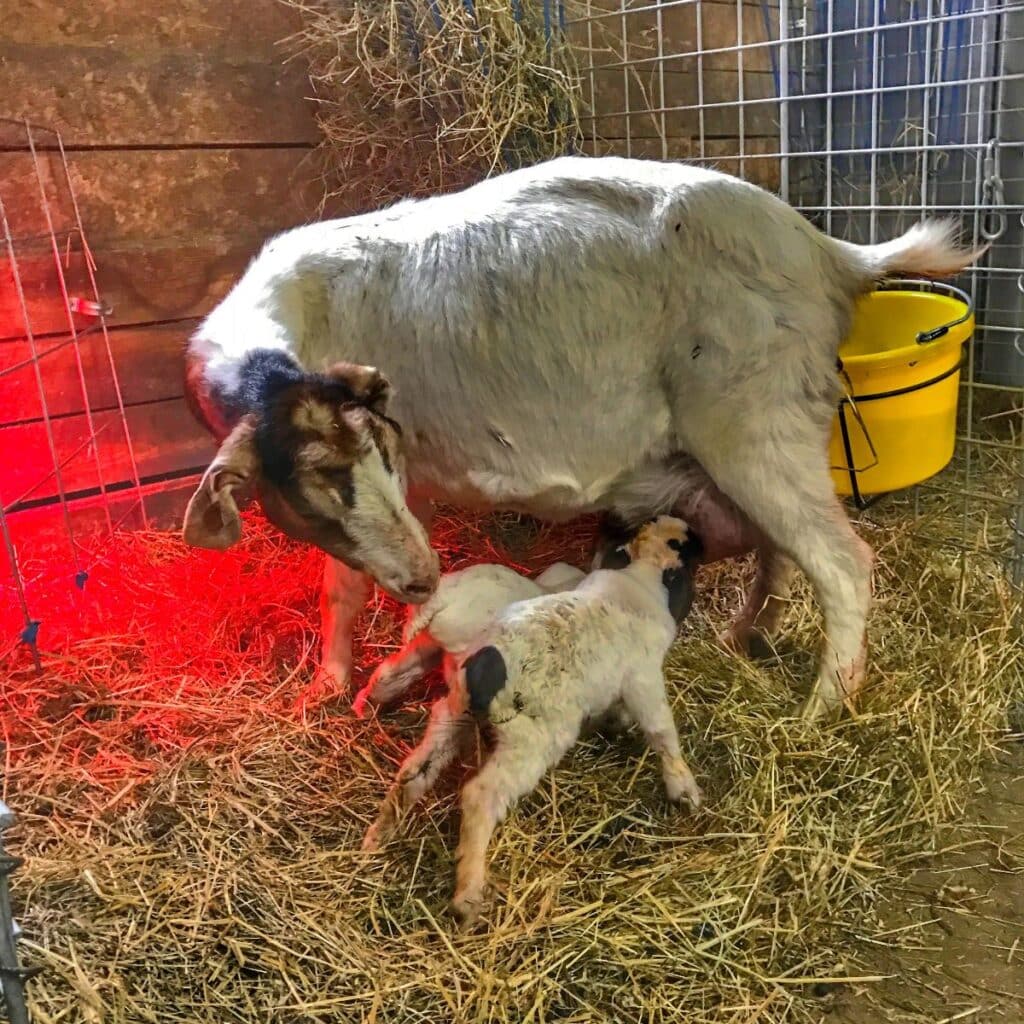
- Spring often marks kidding season. If you want to learn more about early kid care, see my article on newborn goat care after kidding.
- Summer focuses on grazing management and monitoring herd health. In some regions, usually farther south, breeding season may happen in late summer.
- Fall is typically breeding season. Preparing your herd for breeding season is covered in my article on preparing goats for breeding season.
- Winter often involves feeding hay and preparing for the next kidding season.
Marketing and selling meat goats
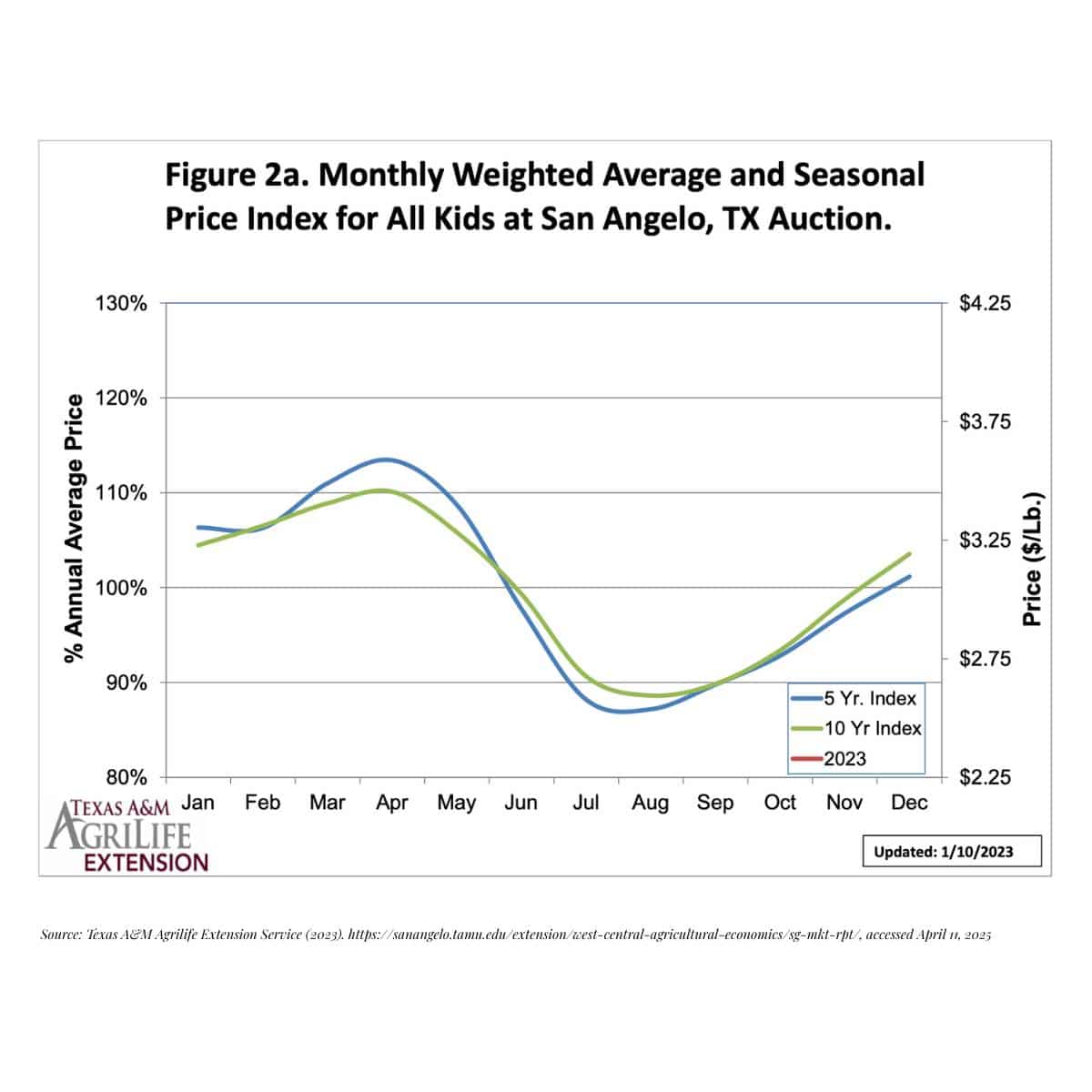
Marketing options for meat goats vary depending on location and herd size. Common marketing channels include:
- livestock auctions
- ethnic holiday markets
- direct-to-consumer meat sales
- wholesale buyers

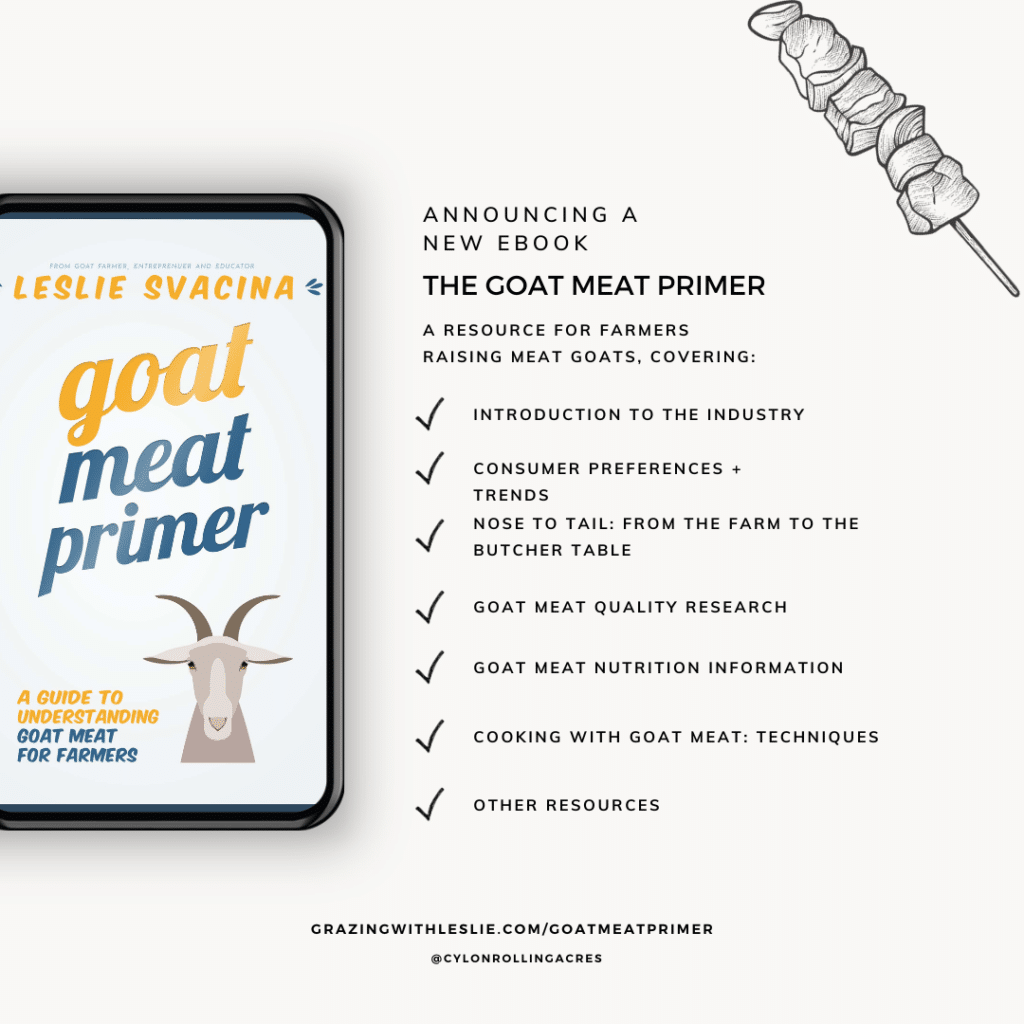
Understanding local market demand can help guide herd management decisions in meat goat production. If you’re interested in learning more about “meat side” of goat meat, you might find my ebook – The Goat Meat Primer: A Guide to Understanding Goat Meat for Farmers.
Checklist for starting a meat goat herd
Before bringing goats home, confirm that you have:
- secure fencing installed
- shelter available
- reliable water system
- mineral feeders set up
- hay feeders and supply
- pasture available
- a veterinarian identified
- predator protection plan in place, if needed
Preparing these elements ahead of time makes starting a herd much smoother.
Common mistakes beginners make
Several challenges are common among new goat owners. Common mistakes include:
- underestimating fencing needs
- starting with too many animals
- buying goats before infrastructure is ready
- ignoring parasite management
- not planning marketing outlets
Starting small and building experience over time can help prevent many of these issues.
FAQ: raising meat goats for beginners
Meat goats can be a good option for beginners because they are adaptable and can utilize a wide range of forage sources. Additionally, they are fairly easy to handle due to their size. However, goats require secure fencing, parasite management, and regular herd observation.
Common meat goat breeds include Boer, Kiko, Spanish, Savanna, and Myotonic goats. Many farms use crossbreeding programs to combine desirable traits.
Many beginners start with three to five goats. Small commercial herds often begin with 10 to 20 breeding does.
Land requirements vary widely depending on pasture productivity, rainfall, and grazing management.
Many pasture-based systems raise goats primarily on forage and hay. Grain may be used during certain production stages.
Goats typically have a gestation period of about five months, or roughly 150 days.


LEAVE A COMMENT
Comments